Scaling Enterprise Design Systems
Overview:
Supporting a product ecosystem serving over 50 million customers required an operational architecture capable of massive scale. Centralized teams were becoming a bottleneck for distributed product teams.
The design organization needed a sophisticated governance framework to manage the lifecycle of enterprise components while allowing disparate teams to contribute and build autonomously.
-
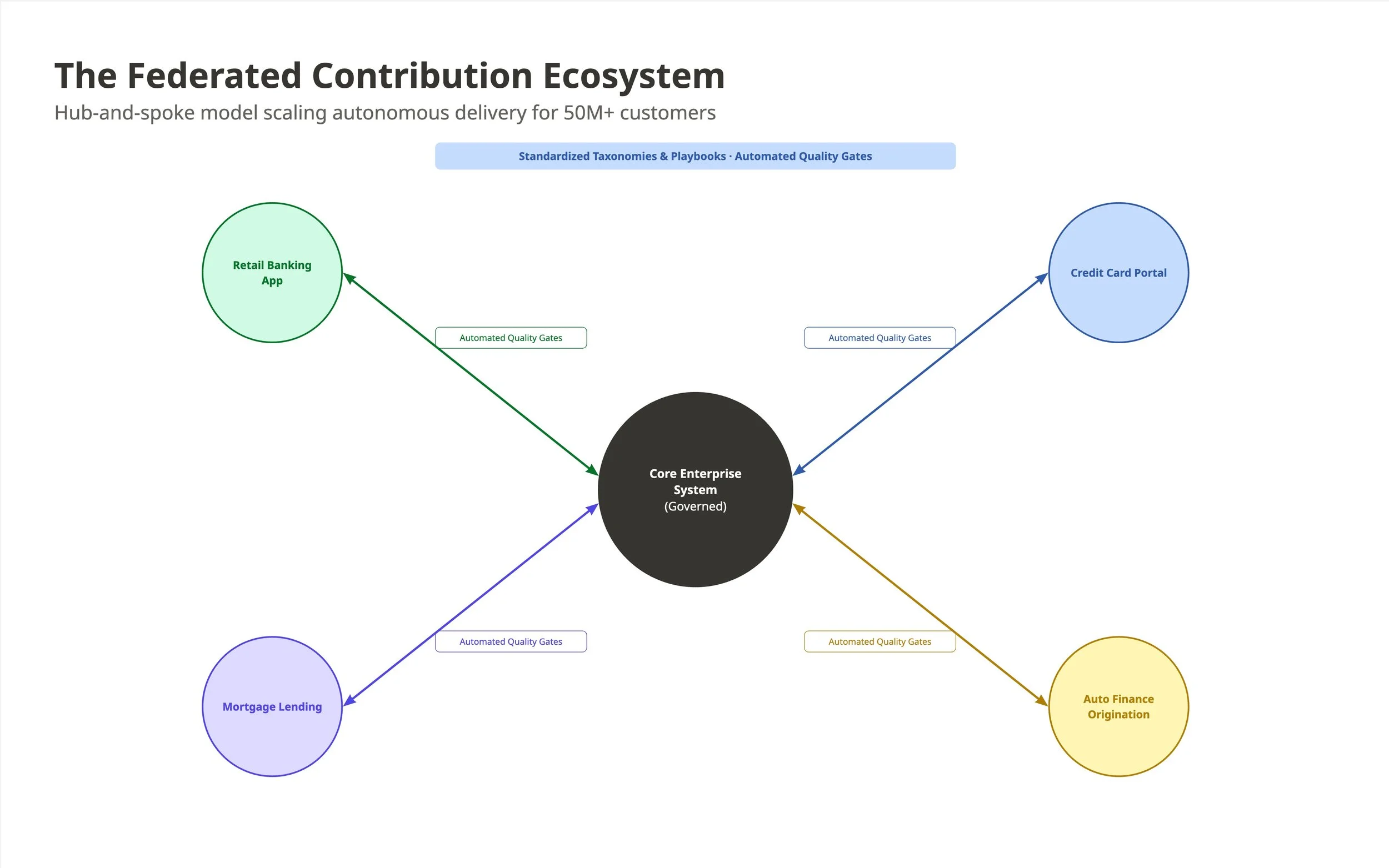
Serving as the Operations Lead, the approach focused on decentralizing execution while centralizing governance.
The goal was to establish a "federated contribution model"—a system where distributed teams could safely and efficiently contribute back to the core enterprise system without compromising quality or institutional standards.
-
Engineered the end-to-end operational lifecycle for enterprise components, defining clear pathways for intake, review, and deployment.
Established a federated contribution model, creating rigorous documentation and clear taxonomies that empowered distributed associates to build within the enterprise framework autonomously to meet their specific product needs, while ensuring the contributed components could be utilized and adjusted to fit the needs of other product work as it arose.
Managed cross-functional alignment between engineering, design, and product leadership to ensure the central system met the diverse needs of the broader organization.
-
The federated governance model successfully unblocked distributed teams, drastically improving time-to-market across the enterprise.
By creating a scalable operational architecture, the institution was able to maintain high-quality, cohesive outputs for a 50M+ customer base without ballooning central operational headcount.